
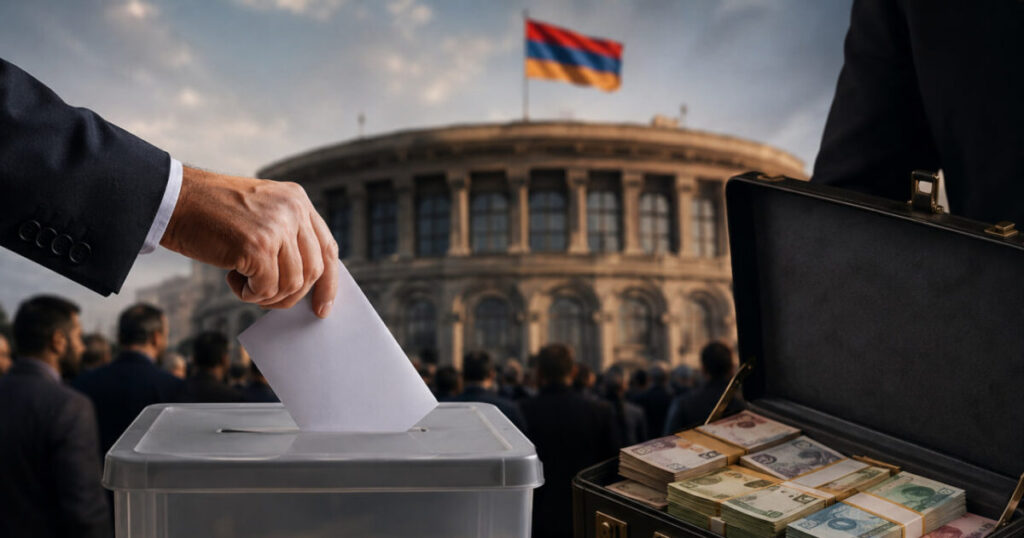
Serious issues related to political finance transparency continue to exist within Armenia’s electoral system. According to electoral systems expert and political scientist Tigran Mughnetsyan, these shortcomings may undermine public trust in election processes.
Financial Information Becomes Available Too Late
According to the expert, financial transparency is one of the most important international democratic standards, particularly during election periods.
At present, voters can learn about the financing of political forces only through annual reports that are published roughly a year after elections take place.
As a result, information about donors and funding sources becomes available long after voters have already cast their ballots.
Violations May Be Discovered After Elections Are Over
Mughnetsyan noted that potential violations of campaign financing rules may only become visible once elections have ended, mandates have been distributed, and political outcomes have already been finalized.
He argues that transparency mechanisms should function during the electoral process rather than after the fact.
Political Activity Often Begins Before Party Registration
The expert also highlighted another issue.
According to him, some political groups actively engage in political activity before formally registering as political parties. During this period, they are not subject to the same transparency requirements that apply to officially registered parties.
This creates opportunities to avoid disclosure obligations while still building political influence.
Pre-Election Spending Can Escape Oversight
Mughnetsyan stated that expenditures made before official party registration, including online advertising campaigns, frequently remain outside regulatory oversight.
In practice, extensive promotional campaigns may occur before the official election campaign period even begins.
State Funding Creates Additional Incentives
Under current legislation, parties that receive at least 2 percent of the vote in parliamentary elections qualify for state funding until the next parliamentary election.
The expert noted that some political groups openly acknowledge that they do not expect to enter parliament but still aim to secure enough votes to qualify for public funding.
According to his calculations, a party reaching the 2 percent threshold may receive approximately 20 million drams annually in state support.
The Goal Is to Reduce Dependence on Private Interests
Mughnetsyan emphasized that public financing was introduced primarily to reduce political parties’ dependence on private business interests and major donors.
At the same time, he believes several provisions of the current system require revision.
Existing Thresholds Are Too High
One example is the rule denying state funding to parties whose assets exceed state support by more than five times.
According to the expert, the threshold is so high that virtually no political party in Armenia falls under this restriction.
Additional Reforms Are Needed
Mughnetsyan believes the current framework plays an important role in supporting the development of the party system.
However, he argues that additional reforms are necessary to improve both fairness and effectiveness, particularly in the area of financial transparency during election campaigns.