
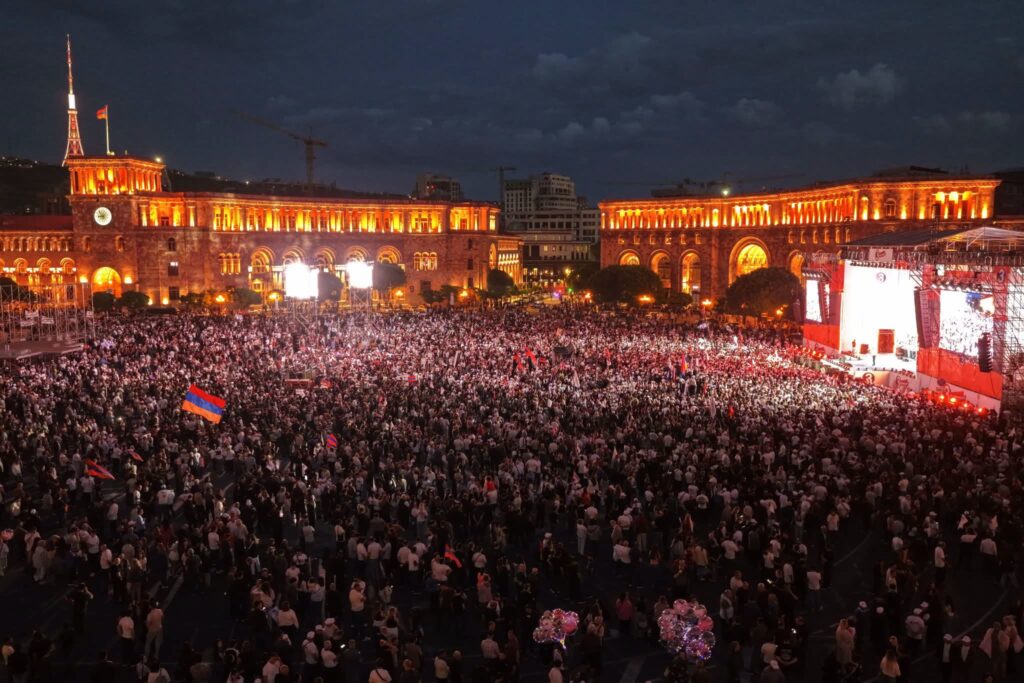
Several days have passed since Armenia’s parliamentary elections. Although it is still unclear exactly how many parties will enter parliament and how the mandates will ultimately be distributed, one issue has already become central to public debate: whether opposition forces should take their mandates or refuse them.
Political commentator Hakob Badalyan argues that the discussion has acquired a strong emotional dimension. A significant part of society is focused almost exclusively on the goal of removing Prime Minister Nikol Pashinyan and the ruling Civil Contract party from power.
According to him, such emotions are understandable given the government’s policies. However, politics is a far more complex process that involves not only domestic realities but also external factors and geopolitical considerations.
Emotions Versus Political Calculation
Badalyan believes that the intensive promotion of the mandate issue may be driven by pragmatic calculations from political actors seeking to strengthen their position within the opposition camp ahead of future political cycles.
In his view, the debate may actually reflect the beginning of competition for leadership within the opposition.
Who Gains from Internal Opposition Conflict?
The commentator argues that such a struggle currently benefits the ruling authorities more than anyone else.
While opposition groups focus on disputes over mandates, they risk neglecting more important tasks such as developing a long-term strategy, preparing for parliamentary work, and creating new methods of political engagement.
Parliament Belongs to the State, Not to the Government
Responding to claims that opposition parties should not work in “Pashinyan’s parliament,” Badalyan stresses that the National Assembly belongs to the Republic of Armenia, not to any individual political leader.
According to him, opposition deputies serve citizens and taxpayers rather than the government.
The Need for a New Opposition Strategy
Badalyan argues that if opposition parties decide to enter parliament, they must develop a more effective methodology for parliamentary work and avoid political traps set by the ruling party.
He also believes that calls for purely street-based political struggle should be accompanied by a serious assessment of why previous attempts failed and what lessons were learned.
More Important Challenges Lie Ahead
According to the commentator, Armenia is entering a new political phase largely shaped by foreign-policy developments.
He argues that international actors who supported the current government will seek to advance their interests, particularly in relation to the Armenia–Azerbaijan process.
For this reason, he believes that focusing exclusively on the mandate debate risks distracting attention from more significant challenges facing the country.
In conclusion, Badalyan maintains that the real issue is not whether mandates should be accepted or rejected, but whether the opposition can build an effective political strategy and provide a meaningful alternative for Armenian society.