
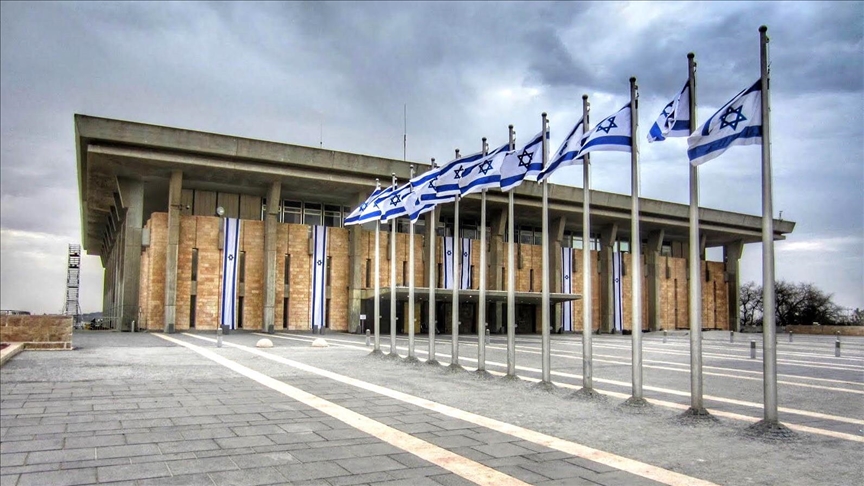
Amid ongoing tensions between Israel and Turkey, the Israeli government has once again returned to the issue of recognizing the Armenian Genocide in the Ottoman Empire. The government has approved Foreign Minister Gideon Sa’ar’s initiative proposing official recognition of the Armenian Genocide and the submission of the matter to the Knesset for consideration.
According to political analyst Sergey Melkonyan, the current initiative demonstrates that Israel is once again moving the issue of Armenian Genocide recognition into the political and legal sphere.
The Proposal Includes Recognition and Condemnation of Denial
The government-approved proposal calls for official recognition of the genocide committed against the Armenian people during the final years of the Ottoman Empire.
The document also seeks to condemn any attempts to deny, minimize, or distort the historical truth surrounding those events. In addition, the government plans to formally notify the Knesset and initiate parliamentary consideration of the proposal.
According to Melkonyan, the document contains not only provisions on recognition but also several political and legal formulations aimed at protecting historical truth.
The Proposal Details the Events of 1915
The explanatory section states that the Armenian Genocide began on April 24, 1915, with the arrests, deportations, and killings of Armenian intellectuals, public figures, and political leaders in Constantinople.
It further notes that Ottoman authorities subsequently carried out the systematic destruction of the Armenian population, resulting in the deaths of approximately 1.5 million people and the destruction of a significant part of the Armenian historical and cultural heritage in Anatolia.
The proposal also emphasizes that despite extensive historical documentation, the Armenian Genocide continues to be the target of organized denial and historical revisionism, primarily promoted by Turkey, including through the rewriting of history textbooks.
It additionally notes that more than thirty countries have already recognized the Armenian Genocide through various legal or political mechanisms.
Two Possible Legal Scenarios
According to Melkonyan, the process could develop along two main paths.
Under the first scenario, recognition would occur through a government decision followed by political endorsement by the Knesset rather than through separate legislation. In that case, recognition would become Israel’s official state position but would not create specific legal obligations for state institutions. Such a decision would carry primarily political and diplomatic significance.
The Second Scenario Involves Separate Legislation
Under the second scenario, the Knesset could adopt a separate law regulating not only recognition of the Armenian Genocide but also memorial days, educational programs, and commemorative activities.
In this case, recognition would become part of Israel’s domestic legal system and create binding legal obligations for state institutions.
Such a solution would also provide greater long-term stability, since repealing or amending legislation would be considerably more difficult than revising a government policy decision.
According to Melkonyan, whether the process ends with a political declaration or results in the adoption of a separate law will become clear during the upcoming debates in the Knesset.