
The Iranian route could be used by Armenia to import not only Iranian gas but also gas from Turkmenistan. According to economist Suren Parsyan, a swap mechanism could be applied under which Turkmenistan would supply gas to Iranian regions bordering the country, while Iran would provide Armenia with a corresponding volume of gas.
“In other words, we can consider both approaches,” Parsyan said, stressing that the implementation of such arrangements would depend on relevant agreements and mutual interests.
Under Certain Conditions, Iranian Gas Could Become More Preferable
The economist also addressed the price at which Iranian gas could reach Armenia. According to his calculations, under the current “gas for electricity” arrangement through which Armenia receives gas from Iran, calculating the value of electricity at wholesale prices and converting it into US dollars brings the gas price to approximately $250 per 1,000 cubic metres.
Parsyan noted that this price is higher than the current Russian gas tariff of approximately $177, but substantially lower than the prices at which Iran sells gas to certain other countries. According to him, Armenia’s current agreement with Iran already provides certain preferential terms, and a lower price could also be discussed if the necessary political agreements are reached.
“For example, if the Russian side abandons the current price of $177, the price could rise to $275 as a result of the 2013 Russian-Armenian agreement. If Iran offers gas at $250 under the same circumstances, Iranian gas would naturally become the more preferable option,” the economist said.
At the same time, Parsyan believes that negotiations over gas prices cannot be viewed solely from an economic perspective. Political and economic processes must proceed in parallel, as their combination could enable Armenia to secure more favourable terms.
The Existing Pipeline Could Cover Up to 60–70% of Armenia’s Gas Consumption
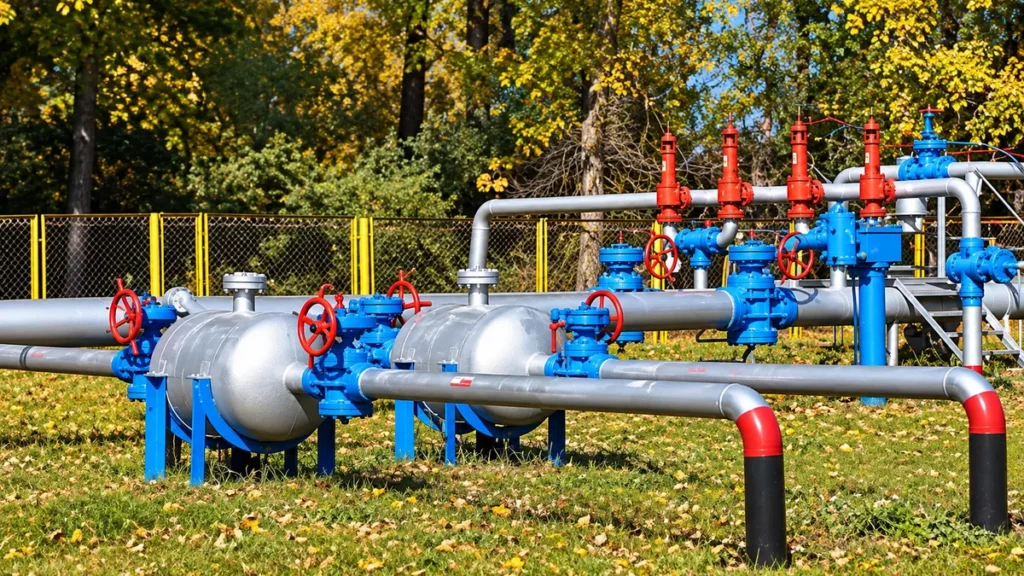
According to Parsyan, constructing a new pipeline would not be a mandatory condition for the potential import of Iranian gas. The Iranian side has already built a pipeline with a diameter of 1,000 mm up to the Armenian border, while a pipeline with a diameter of 700 mm is used within Armenia.
Parsyan noted that, following certain technical upgrades and investments, the existing infrastructure could support annual imports of up to 2.2 billion cubic metres of Iranian gas. “This could cover approximately 60–70% of our domestic gas consumption,” he said, noting that Armenia consumes around 3 billion cubic metres of gas annually.
Therefore, expanding the Iranian route would not require the creation of entirely new infrastructure. According to Parsyan, the technical capacity of the existing pipeline could be increased within a relatively short period, possibly even within several months.
If Armenia were to set the objective of switching entirely to Iranian gas, a solution would still be possible by constructing a new pipeline parallel to the existing one. Parsyan said that, since a substantial part of the excavation work required for the construction of a pipeline has already been completed, building a parallel pipeline would be considerably easier and less expensive, both financially and technically.
The Objective Should Not Be to Abandon Russian Gas Completely
At the same time, the economist stressed that the objective of Armenia’s energy policy should not be to abandon Russian gas completely and replace it entirely with Iranian gas.
“Our objective should not become anti-Russian—that is, to abandon Russian gas completely and switch entirely to Iranian gas. This is the logic of our approach and a pillar of security. We should seek to work with both sides on the basis of mutually beneficial principles,” Parsyan said.
In his assessment, after the existing pipeline undergoes technical upgrades, it will be possible to import more than 2 billion cubic metres of gas through the Iranian route. According to him, ensuring these volumes would not present a major technical challenge.