
Statements by the Armenian authorities regarding the presence of the Russian military base imply a possible revision of the terms of the existing agreement and could mark the beginning of a complicated process. Political strategist Armen Badalyan made this statement.
“In one of his statements, the Armenian prime minister said that the presence of the Russian military base had already become an anachronism. He said: ‘We are not telling you to leave, but we are not telling you to stay either. But if you are going to stay, we need to determine the conditions under which you stay,’” Badalyan noted.
According to him, the very wording “determine the conditions” means that the existing agreement could be subject to revision.
“This means that we are revising the agreement. Because the agreement says that the conditions remain unchanged until 2044. If you say, ‘Let’s discuss the conditions,’ it means you are revising the conditions. And will Russia agree to revise them or not? In other words, we are going to find ourselves in a rather complicated situation,” he said.
“If Russia Leaves, It Does Not Mean Someone Else Will Immediately Take Its Place”
According to Badalyan, the issue should be viewed not only in the context of Armenia-Russia relations but also within broader regional processes.
He said the geopolitical importance of the region should also be considered from the perspective of the South Caucasus as a territory connecting Central Asia with Europe.
“If Russia leaves, it is leaving not only Armenia but Central Asia as well. Always remember: the South Caucasus is this Middle Corridor running from Central Asia toward Europe. In other words, if you leave here, you have nothing left to do there either,” Badalyan said.
At the same time, he emphasized that a possible reduction in the Russian presence does not automatically mean that armed forces from Western countries would appear in Armenia.
“If Russia leaves, it does not mean that France or the United States will come here,” he said.
Turkey or Perhaps Iran?
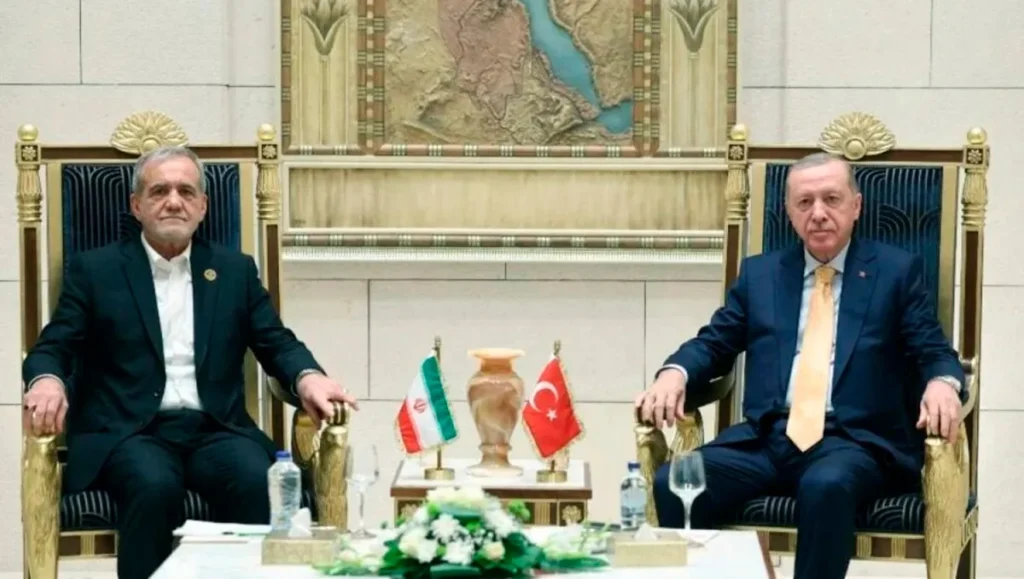
In his assessment, if Russia leaves, a change in the regional balance of power could concern Tehran, particularly in the context of Syunik, Tigranashen, Georgia and regional communications.
In this context, the Iranian side could refer to the 1828 Treaty of Turkmenchay, which ended the Russo-Persian War and transferred significant territories of Eastern Armenia to the Russian Empire.
According to Badalyan, this historical event has not disappeared from Iran’s political memory.
“The Treaty of Turkmenchay is written in black letters in Persian history. They still remember that it was the treaty of their defeat,” he said.
In his assessment, if Armenia’s security environment changes dramatically, Iran could seek to assume a more active role in the region.
“In that case, the ayatollah or the rahbar could say: then the Treaty of Turkmenchay is annulled,” Badalyan said, adding that if Russia leaves the region, its place would by no means necessarily be taken by Turkey, as many believe.
Badalyan also did not rule out the possibility of an Iranian military presence, stressing that such a development could be driven by Iran’s concerns over the security of Armenia’s southern borders and regional communications.
“Forget About TRIPP, Forget About French Troops”
Badalyan categorically ruled out a scenario in which American, French or Turkish troops could immediately appear in Armenia if the country’s security environment changes.
“Forget about Turkish troops, forget about French troops, forget about TRIPP,” he said, describing discussions surrounding TRIPP as an agenda promoted by the political authorities.
At the same time, he listed more active Iranian involvement among the possible scenarios.
Badalyan also emphasized the existence of the Armenian community in Iran, noting that this factor could also have some significance in possible future developments.
“The Persians have an Armenian community numbering several tens of thousands,” he said, adding that under one of the scenarios he envisions, Iranian influence could manifest itself not only militarily but also politically.
According to him, changes in the regional balance of power could produce various development scenarios, and it would be wrong to rule any of them out in advance.
“There are different development scenarios,” the political strategist concluded.