
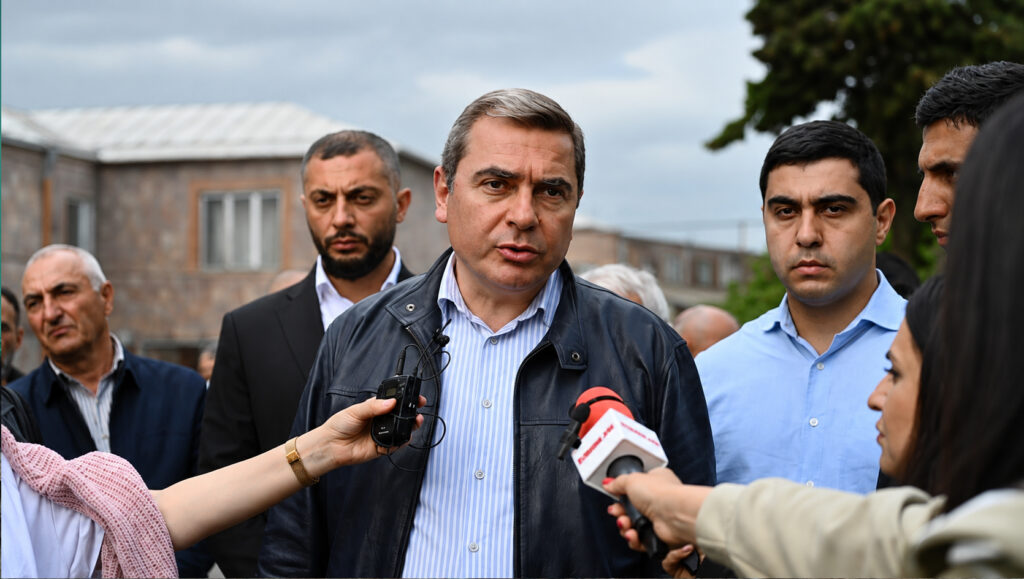
The Armenian authorities understand that leaving the Eurasian Economic Union (EAEU) would have serious economic consequences for the country. For that reason, they are not genuinely seeking to sever relations with the bloc. This view was expressed by former Chairman of Armenia’s State Revenue Committee and economist David Ananyan.
According to him, official Yerevan has long attempted to develop relations with both the EAEU and the European Union simultaneously, while also using the European agenda for domestic political purposes.
Ananyan believes that anti-Russian rhetoric and the idea of European integration have become important political tools for maintaining the current government’s position.
Europe Does Not View Armenia as a Major Producer
According to Ananyan, the widespread assumption that Europe is interested in importing Armenian products on a large scale does not reflect reality.
“If we view the European Union as a consumer market of around 450 million people with strong purchasing power, they do not see us as a manufacturing country capable of supplying that market. They do not expect Armenia to produce agricultural or industrial goods that will be widely consumed across Europe,” he said.
In Ananyan’s view, Brussels primarily regards new members or partner countries as additional markets for European products.
At the same time, the European Union imposes demanding technical and quality standards, making the adaptation of domestic production a long-term and costly process.
The Government Is Trying to Avoid a Final Choice
Speaking about Armenia’s relations with Russia, Ananyan argued that Nikol Pashinyan’s policies do not indicate a genuine intention to withdraw Armenia from the EAEU.
He believes the prime minister is operating under the influence of different foreign policy centers and is attempting to perform the political role expected of him while avoiding a final strategic choice.
According to Ananyan, Pashinyan previously managed to send different signals to both Moscow and Brussels while preserving a degree of diplomatic flexibility.
That opportunity, however, has now largely disappeared.
“Today both Europe and Russia have forced him to make a choice. He no longer enjoys the same freedom of maneuver and is now trying to determine which option would be less painful,” Ananyan said.
Anti-Russian Statements Are Part of a Political Tactic
According to the economist, the recent anti-Russian statements should not be interpreted as evidence of the Armenian government’s genuine long-term strategic position.
Instead, he believes they are primarily part of a political tactic aimed at buying time rather than a real intention to permanently break relations with Russia.