
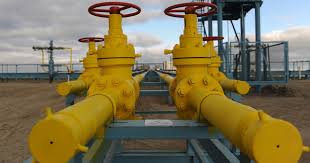
The decision to possibly relocate the 5.5-kilometer section of the Armenia–Georgia gas pipeline may be linked to the border delimitation processes with Azerbaijan. This is the view expressed by political analyst Hrant Mikaelyan.
The Hypothesis of Border Changes
According to him, officially the presence of minefields is cited as the reason for the relocation. However, in his assessment, a logical question arises: if this gas pipeline has been operating for more than 30 years, and the mining was carried out back in the early 1990s, why has this problem become relevant exactly now?
This circumstance, according to the political analyst, suggests that new changes are taking place that go beyond purely technical logic. Mikaelyan does not rule out that the issue of relocating the gas pipeline may be connected to the Armenian-Azerbaijani border delimitation process. According to his hypothesis, in the area where the borders of Armenia, Georgia, and Azerbaijan intersect, Armenian forces advanced in the 1990s to ensure the security of the gas pipeline.
Today, in his opinion, Azerbaijan may be demanding the withdrawal of Armenian forces from those positions, which in turn creates the need to relocate the gas pipeline. Although the political analyst stresses that this is still only an assumption and requires additional confirmation, it fits into the logic of the ongoing processes.
Delimitation or Unilateral Concessions?
Referring to the overall border delimitation process, Mikaelyan recalls that it should be carried out on the basis of mutual agreement and exclude the use of force — in accordance with international practice and the principles accepted within the OSCE framework.
However, in his assessment, what is happening in Armenia does not meet these standards. He recalls the events of 2024, when, according to him, the Armenian authorities were effectively making decisions under the threat of military escalation.
The political analyst notes that border changes are occurring asymmetrically: in areas where the Armenian side advanced in the 1990s, Azerbaijan demands a return to previous positions, while territories where the Azerbaijani side advanced are not being discussed in the context of return.
Mikaelyan also touches upon the issue of enclaves, reminding that the borders formed during the Soviet years were inherently complex and contradictory. In that system, there were territories that had come under mutual control, such as Artsvashen and Tigranashen.
In his opinion, if we are talking about genuine delimitation, it should be carried out either through a complete exchange or through a comprehensive settlement, rather than through a selective approach.