
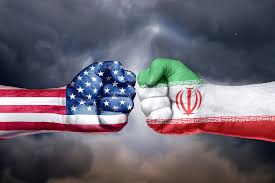
At this stage, Iran is guided by a clear calculation — to continue the struggle until negotiations begin on the most acceptable terms for it. This was stated by Iranian political commentator Pouya Hosseini.
According to him, a compromise option is also possible, but the likelihood of its implementation largely depends on the positions the parties will hold at the moment the war ends. “Whoever is in a stronger position by the end of the war will dictate the negotiation agenda,” the analyst notes.
Unachieved Goals and a Changed Agenda
The analyst recalls that at the beginning of the war, US President Donald Trump declared maximally ambitious goals — regime change in Iran and the complete subjugation of the country. However, according to Hosseini, after 28 days none of these goals have been achieved.
Instead, Washington’s attention has shifted in another direction — primarily focusing on control over the Strait of Hormuz.
“If the initial goals have not been realized, it is difficult to talk about victory,” he emphasizes, adding that among the achievements one can only point to separate military operations, which were nullified as a result of administrative reshuffles in Iran. According to him, the governing system continues to function stably.
The Image of “Hegemony” Called into Question
Hosseini draws attention to the global role of the United States, noting that the war has cast doubt on Washington’s position as the world hegemon.
According to him, if even after several weeks the US cannot fully control the Strait of Hormuz and is forced to seek help from NATO and its allies, serious questions arise about its military and political capabilities.
“What kind of superpower is it that cannot protect its military bases or ensure the security of its allies?” the analyst asks, pointing out that numerous American facilities in the region have become targets.
The Resistance Factor and the New Balance of Power
In Hosseini’s opinion, the war has demonstrated one important point: the United States cannot unconditionally implement all its military-political goals if it encounters organized and serious resistance.
He also addresses Washington’s broad geopolitical ambitions, emphasizing that the desire for control over various regions has so far not met with adequate opposition. However, in the case of Iran, the situation is different, he says.
“This war has shown that under conditions of serious resistance, it is impossible to achieve all the desired results even with the powerful resources that the United States possesses,” concludes the Iranian analyst.