
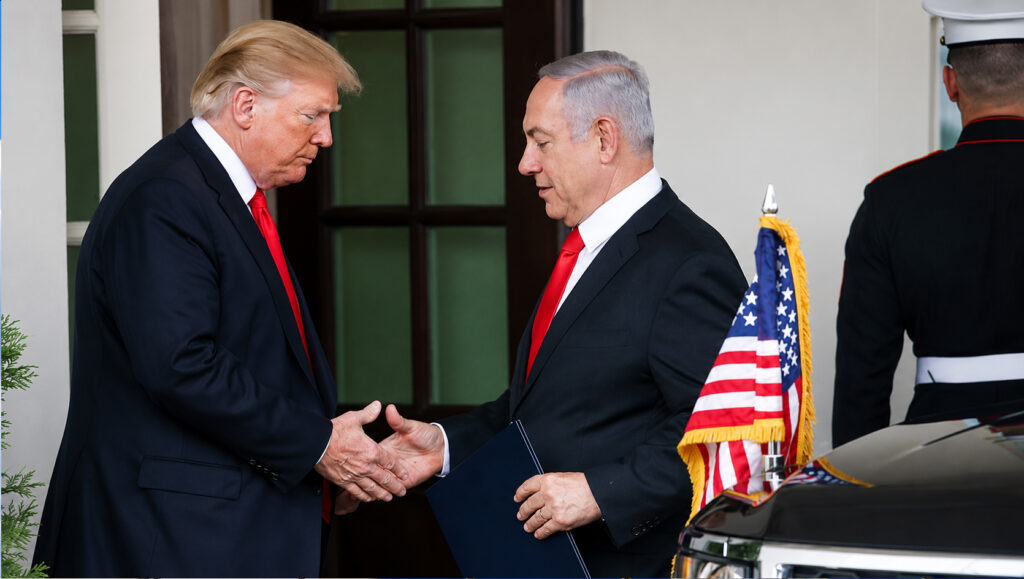
The United States is reportedly considering the possibility of imposing a land blockade on Iran. If such a scenario is implemented, Armenia could face a difficult geopolitical choice. This view was expressed by international affairs expert Grigory Balasanyan, commenting on reports in the American press that a possible land blockade was discussed during a meeting between the leaders of the United States and Israel as one option for increasing pressure on Tehran.
Armenia’s Position Could Become a Key Issue
Balasanyan recalled that Iran shares land borders with seven countries, including Armenia. For this reason, he believes Yerevan’s position could become one of the central issues if the plan moves forward.
The expert said such developments would place the Armenian authorities under serious pressure. He recalled that in 2019, during a visit to Armenia by then-U.S. National Security Adviser John Bolton, Prime Minister Nikol Pashinyan stated that the Armenian-Iranian border could theoretically be closed.
According to Balasanyan, the same question is now emerging again: whether official Yerevan will be able to withstand possible external pressure if the plan to isolate Iran enters a practical phase.
TRIPP and Control Over the Armenian-Iranian Border
Balasanyan argued that by promoting the TRIPP project, the United States is in fact seeking to establish control over the Armenian-Iranian border and continues to take steps in that direction.
He said American military units are already stationed in several countries and could, in his view, become involved in implementing such a plan.
The expert noted that Armenia’s decision could directly affect not only Armenian-U.S. relations but also cooperation between Armenia and Iran.
He added that it remains unclear whether such developments could change Iran’s position toward Armenia, particularly with regard to the Syunik region.
Geopolitical Rivalry Will Continue After the Fighting Ends
Addressing the broader regional situation, Balasanyan said military operations will eventually come to an end. Negotiations between the United States and Iran may also conclude, and the sides could even sign a peace agreement.
However, he believes serious geopolitical processes will continue across the region even after that.
He also referred to the behavior of the Arab states of the Persian Gulf, noting that they are already appealing to Iran not to strike their territories.
Gulf States Fear Iranian Retaliation
According to Balasanyan, Bahrain has been particularly active. He claimed that the country had previously taken tough measures against politicians and citizens viewed as sympathetic to Iran but is now seeking to avoid possible Iranian retaliation.
In conclusion, the expert said that confrontation in the Middle East will not end even after military clashes cease.
Developments surrounding Iran, he argued, will continue to have a significant impact on the entire region, including Armenia’s security and foreign policy.