
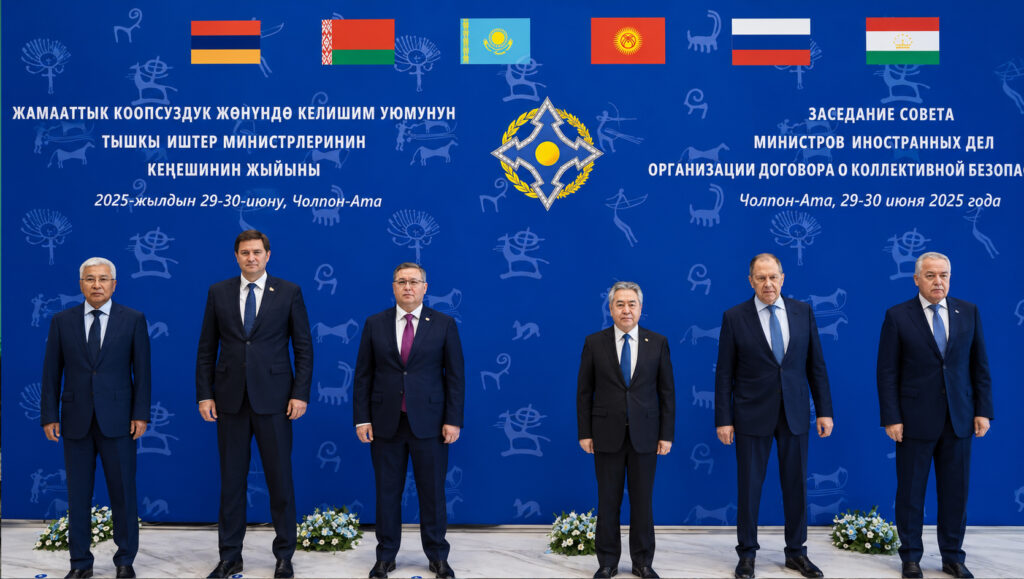
The possibility of discussing the suspension of Armenia’s voting rights within the Collective Security Treaty Organization (CSTO) is linked to the country’s failure to make contributions to the organization’s common budget. This was stated by political commentator Artyom Yernkanyan while commenting on possible CSTO decisions.
“It is a fact that Armenia has not made contributions to the CSTO’s common budget for almost three years. The amount of the debt is classified. Ten percent of the budget is formed through Armenia’s participation. It is not a large amount, but Armenia has not paid it for reasons of principle,” he said.
According to Yernkanyan, the CSTO Charter provides for sanctions in such cases.
The CSTO Charter Provides Two Possible Sanctions
“Article 25 of the CSTO Charter clearly states that if a member state fails to make contributions to the common budget for two years, the Council has the right to impose sanctions. There are two options: deprive the state of its voting rights or deprive it of the right to have representatives in the organization’s governing bodies,” he explained.
Yernkanyan stressed that both restrictions already exist in practice, although not because of CSTO decisions but because of actions taken by the Armenian authorities themselves.
“Both restrictions already exist today, but not by decision of the Council. Armenia has withdrawn its representatives from the CSTO Secretariat and the Joint Staff, and it has failed to send delegations to several consecutive summits. Therefore, if a decision is adopted at the upcoming summit, it will merely formalize what already exists de facto,” he said.
Voting Rights Could Be Restricted First
According to Yernkanyan, possible measures against Armenia are most likely to begin with restricting its voting rights.
“It is highly likely that this issue will indeed be raised and put to a vote on November 11 at the Collective Security Council meeting in Moscow,” he said.
Legal Grounds for Expulsion Already Exist
Commenting on the possibility of Armenia’s removal from the organization, Yernkanyan said the legal basis already exists.
“The formal legal grounds for considering Armenia’s membership already exist today because Article 20 of the Charter clearly states that a state may be expelled if it systematically violates its obligations and fails to comply with the Charter,” he said.
According to the political commentator, CSTO member states may discuss such an issue even without Armenia’s participation.
“The Charter explicitly allows this. The state whose fate is being decided may not even be present, and in such cases its vote is not taken into account. The right of veto does not apply,” he explained.
Expulsion Is Unlikely in the Near Future
At the same time, Yernkanyan believes that Armenia’s possible expulsion or withdrawal is unlikely to be considered in the near future.
“I believe this issue will not be discussed at the upcoming summit in Moscow. Most likely, the process will move step by step. The first stage will involve voting rights and representation, while about a year and a half later the issue of membership itself may also be put to a vote,” Artyom Yernkanyan concluded.
“It is a fact that Armenia has not made contributions to the CSTO’s common budget for almost three years. The amount of the debt is classified. Ten percent of the budget is formed through Armenia’s participation. It is not a large amount, but Armenia has not paid it for reasons of principle,” he said.
According to Yernkanyan, the CSTO Charter provides for sanctions in such cases.
The CSTO Charter Provides Two Possible Sanctions
“Article 25 of the CSTO Charter clearly states that if a member state fails to make contributions to the common budget for two years, the Council has the right to impose sanctions. There are two options: deprive the state of its voting rights or deprive it of the right to have representatives in the organization’s governing bodies,” he explained.
Yernkanyan stressed that both restrictions already exist in practice, although not because of CSTO decisions but because of actions taken by the Armenian authorities themselves.
“Both restrictions already exist today, but not by decision of the Council. Armenia has withdrawn its representatives from the CSTO Secretariat and the Joint Staff, and it has failed to send delegations to several consecutive summits. Therefore, if a decision is adopted at the upcoming summit, it will merely formalize what already exists de facto,” he said.
Voting Rights Could Be Restricted First
According to Yernkanyan, possible measures against Armenia are most likely to begin with restricting its voting rights.
“It is highly likely that this issue will indeed be raised and put to a vote on November 11 at the Collective Security Council meeting in Moscow,” he said.
Legal Grounds for Expulsion Already Exist
Commenting on the possibility of Armenia’s removal from the organization, Yernkanyan said the legal basis already exists.
“The formal legal grounds for considering Armenia’s membership already exist today because Article 20 of the Charter clearly states that a state may be expelled if it systematically violates its obligations and fails to comply with the Charter,” he said.
According to the political commentator, CSTO member states may discuss such an issue even without Armenia’s participation.
“The Charter explicitly allows this. The state whose fate is being decided may not even be present, and in such cases its vote is not taken into account. The right of veto does not apply,” he explained.
Expulsion Is Unlikely in the Near Future
At the same time, Yernkanyan believes that Armenia’s possible expulsion or withdrawal is unlikely to be considered in the near future.
“I believe this issue will not be discussed at the upcoming summit in Moscow. Most likely, the process will move step by step. The first stage will involve voting rights and representation, while about a year and a half later the issue of membership itself may also be put to a vote,” Artyom Yernkanyan concluded.