
In recent months, Armenian authorities have actively promoted the TRIPP project, presenting it as a key component of the “Crossroads of Peace” initiative. In order to accelerate its implementation, the prime minister publicly called on the South Caucasus Railway Company, which operates Armenia’s railways under a concession agreement, as well as on the Russian side, to promptly restore several railway sections. This would allow Armenia to be fully prepared for the unblocking of regional communications.
So far, however, no response has come from Russia. Against this backdrop, expert circles increasingly voice calls to review or revoke the railway concession agreement, citing Russia’s failure to fulfill its obligations.
An investment of around $100 million
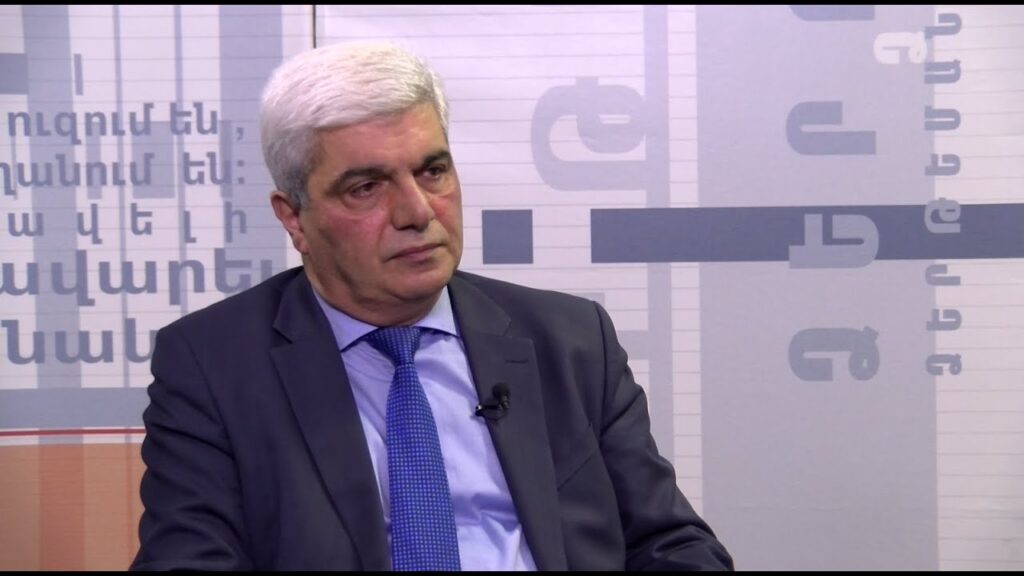
According to political analyst Stepan Grigoryan, despite Russia’s difficult financial situation and the large debts of Russian Railways, the issue is political rather than economic. He notes that restoring the railway sections mentioned by the prime minister does not require billions in investment.
The discussion concerns only several kilometers of railway track, including the segment from Yeraskh to the Nakhichevan border. Infrastructure on the Armenian side has been destroyed, while the Azerbaijani side remains intact.
“We are talking about investments of roughly $100 million. For projects of this scale, that is a relatively small amount. Therefore, this is not a financial issue but a political one,” Grigoryan stresses.
Clash of political interests and Russia’s position
Grigoryan argues that, despite criticism voiced in Armenia regarding Russia’s failure to meet its obligations as a strategic partner, the situation must be assessed realistically. Russia, he says, is a serious state and will not implement projects it perceives as contradicting its interests.
“I personally do not believe that TRIPP contradicts Russia’s interests. However, within Russia’s current political logic — focused on preserving spheres of influence — the project is perceived that way,” he notes. Under such circumstances, Moscow is unlikely to proceed with its implementation.
The issue of denouncing the concession agreement
In this situation, Grigoryan believes Armenia must consider its next steps. If the Russian side ignores the prime minister’s appeal and fails to carry out critically important work, the government should initiate the process of denouncing the concession agreement.
“Time is extremely important for us, and this issue is vital. Under conditions of inaction by the South Caucasus Railway, Armenia is obliged to begin the procedure of exiting the concession,” he says, emphasizing that while legal details should be handled by professionals, the political decision must not be delayed.
Sovereign decisions as “hostile steps”
Grigoryan agrees that terminating the concession agreement could be perceived by Russia as a hostile act. However, he notes that Armenia’s efforts to find alternative partners in various sectors have always been viewed in Moscow in the same way.
“Any initiative aimed at strengthening Armenia’s sovereignty is seen in certain circles as an undesirable development,” he explains.
Grigoryan points out that Russia currently does not supply weapons to Armenia. This, he says, is not merely his opinion but Russia’s official position. According to him, Russia has reached agreements with Azerbaijan on Armenia’s demilitarization. Since 2020, these agreements have taken legal, semi-confidential, and even classified forms.
In this context, Armenia is trying to find alternative solutions in the military-technical sphere. This is natural, Grigoryan argues, since any government must think about the security of its citizens. However, such cooperation often triggers jealous reactions within certain Russian circles.
Financial conditions surrounding nuclear power
“A similar situation exists in the energy sector. When the option of an American-built nuclear power plant is discussed, the reaction is not ‘we agree’ or ‘we disagree,’ but rather ‘why are you discussing this at all?’” Grigoryan says.
He notes that while Russia officially declares its readiness to build a new nuclear power plant in Armenia, it simultaneously puts forward serious financial preconditions. According to his information, these include heavy financial obligations already at the research and preparatory stages.
As a result, a contradictory picture emerges: Russia does not want Armenia to cooperate with other countries, yet offers no viable alternatives of its own.
“They do not want us to work with others, but in return they give us nothing. This is already a serious problem for Armenia,” Grigoryan concludes.