
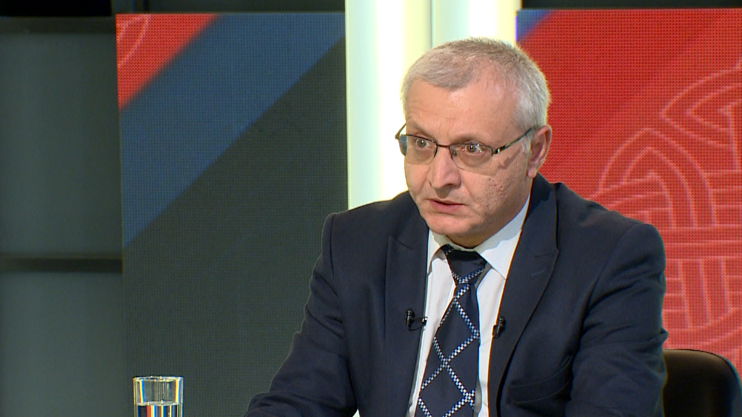
Political analyst Suren Surenyants commented on the criminal case initiated against young individuals following the incident at Surb Anna Church, stating that it raises numerous questions.
In his assessment, the authorities’ claim of “interference with the lawful official or political activities of a public official” contains a fundamental contradiction. He questions whether the prime minister was actually performing official or political duties while in the church.
The Issue of Church–State Separation
Surenyants recalls that, according to the logic of Armenia’s Constitution, the church and the state are separate. In his view, a church is not a platform for public administration, and state authority cannot be exercised there.
In this context, if no official activity was taking place, it is unclear what exactly the young people interfered with. According to the analyst, this is the key point where the entire structure of the accusation collapses.
An “Artificially Aggravated” Charge
He also stresses that the charges appear disproportionate and artificially expanded. The combination of hooliganism and “interference,” he argues, creates an aggravated accusation that resembles a political message aimed at punishing dissent.
Warning of a Dangerous Precedent
Surenyants warns that this case could set a dangerous precedent. If any incident can be framed as “interference with a public official’s activities,” then, by the same logic, any form of disagreement could be criminalized in the future.
He adds that if actions in a church are considered official activity, it would imply that expressing disagreement with the prime minister in any public space—whether a church, café, or theater—could be classified as “interference,” which he describes as a legal absurdity.