
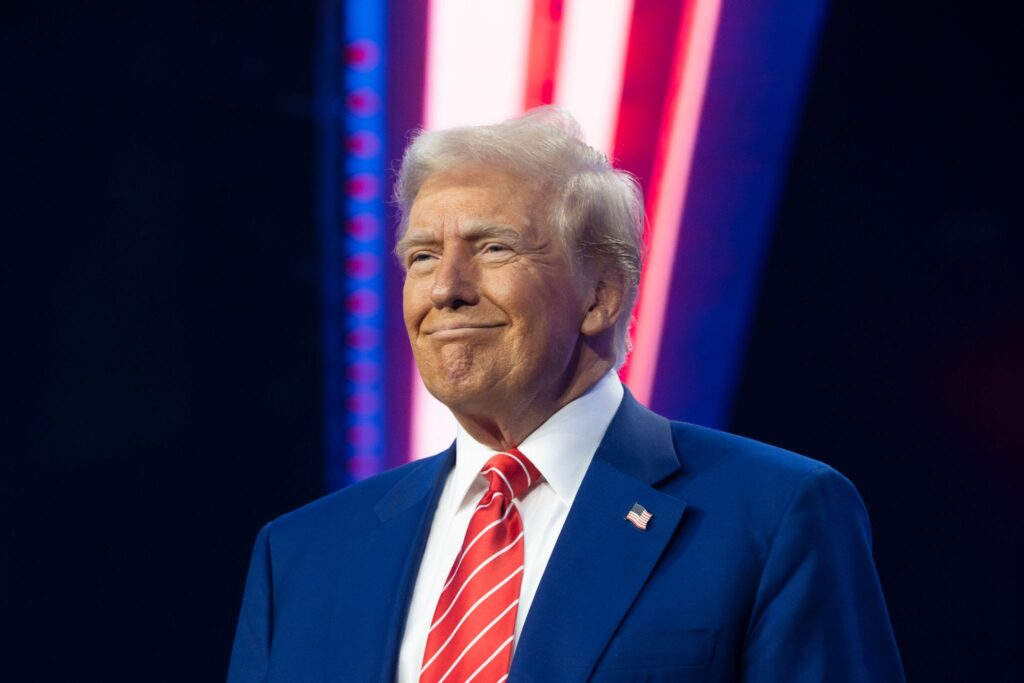
Soon, US Vice President J.D. Vance will visit Armenia. According to preliminary information, the visit will include the establishment of a company associated, in a sense, with the “Trump-oriented” direction, as well as the signing of agreements and contracts in the fields of energy and artificial intelligence. How can this visit be assessed? What significance does it have? What are its objectives, and in what broader political and regional context is it taking place? Political analyst Boris Navasardyan shares his opinion on these questions.
According to him, Vice President Vance’s visit to Armenia carries not only practical but also clearly symbolic significance. As the analyst notes, a US official of this level has not yet visited Armenia. Vance’s visit, in his view, demonstrates that the United States attaches great importance to cooperation with Armenia.
Practical agenda and possible “surprises”
Navasardyan notes that the main agenda of the visit is known: it includes the development of artificial intelligence, the creation of data centers, investments in the energy sector, as well as the process of unblocking communications. These areas indicate that this is not merely a political gesture, but reflects long-term interests and concrete cooperation plans.
At the same time, Navasardyan does not rule out that visits of such a high level are usually accompanied by unexpected decisions. In his assessment, these possible “surprises” could be positive and expand the scope of Armenian-American cooperation. The analyst also notes that the current US administration is a supporter of peace, and in this context, Vance’s visit may also have an internal political subtext for Armenia, contributing to easing tensions between the government and the church.
US role in the Armenian-Azerbaijani process
Speaking about the significance of TRIPP, Navasardyan pointed out that, in both Armenia and Azerbaijan, long-standing stereotypes and rigid thinking seriously hindered the recognition of mutual interests and reaching compromises. Even when some political and expert circles recognized potential benefits of cooperation between the two countries, existing psychological and political constraints were difficult to overcome.
The analyst recalls that both before and after the 44-day war, there was a profound lack of trust between the parties, which effectively stalled the conflict resolution process. In this situation, an external factor was necessary to bring the parties to a field where the previous obstacles no longer applied. According to Navasardyan, this factor was the US initiative and Donald Trump’s personal desire to resolve issues quickly and decisively.
Although US actions in different regions of the world may be evaluated differently, Navasardyan is convinced that in this case Washington’s role for Armenia was positive and important. Without this intervention, he believes, there was a high probability that the region would have remained in confrontation mode for a long time.
The Iran factor and unblocking communications
The analyst also addresses concerns that US activity in Armenia could be seen as a threat to Iran. In his view, these claims are exaggerated, especially considering the 43-kilometer section of the Armenia-Iran border.
According to him, the emerging US-Armenian economic and infrastructure cooperation is primarily aimed at developing communications and solving economic problems and does not pose real security threats to Iran. On the contrary, unblocking communications could create new opportunities to involve Armenia’s various partners in regional projects.
Navasardyan notes that, besides the Armenia-Iran border segment, other unresolved infrastructure issues remain — the restoration of the railway through Nakhchivan, the development of northern communications in Armenia — which await investments and operation. In his view, if partners are ready to invest and support the development of communications, Yerevan will be ready to cooperate.