
Over the past 100 years, the primary goal of the United States in the Middle East has remained the same — control over global oil resources. This was stated by military expert Vova Vardanyan.
Oil as a strategic objective
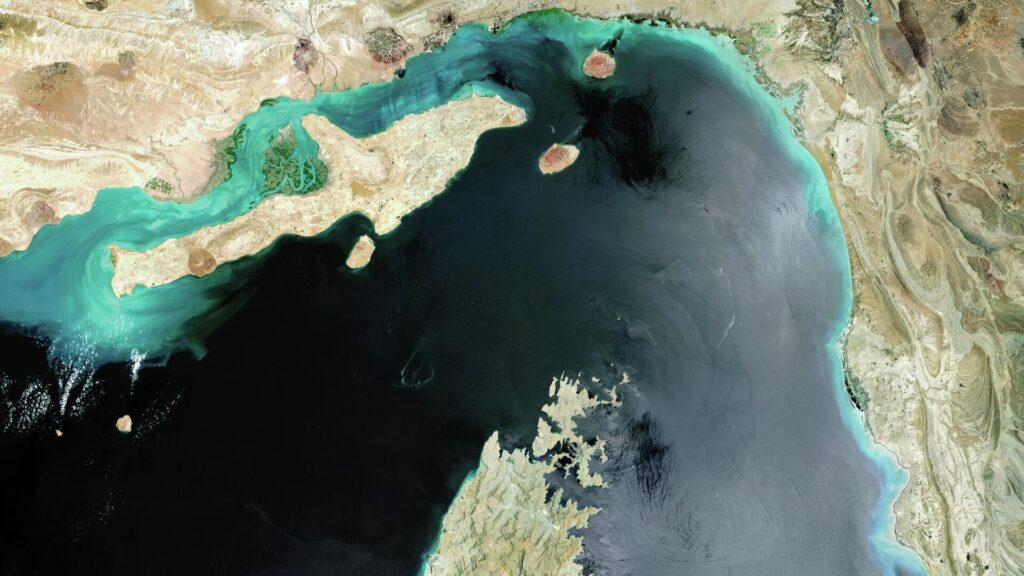
According to him, the current tensions around Iran, including the blockade of the Strait of Hormuz, actually benefit the United States.
Washington possesses vast domestic oil reserves. It also controls oil resources in Venezuela and Iraq. Under these conditions, the U.S. is attempting to deliver a final blow to Iran’s oil production and establish itself as a global “oil hegemon.”
The Venezuela example
The expert recalled that six months ago, U.S. pressure on Venezuela reached its peak. This included a naval buildup and the effective “abduction” of President Nicolás Maduro.
“Regime change and democracy were just rhetoric. In reality, the same system remained in power. The key issue was oil,” Vardanyan noted.
He emphasized that Venezuela’s heavy oil effectively came under U.S. control.
Iran as the next target
According to the expert, the United States already controls oil flows from Iraq and Venezuela. Iran is now the next focus.
About 20% of global oil is produced by the United States. Comparable volumes were previously produced by Venezuela and Iraq. Iran also has the capacity to produce significant amounts.
This is why, Vardanyan argues, Washington is pursuing a similar scenario in Iran.
Control over global oil flows
In this context, the blockade of the Strait of Hormuz aligns with U.S. interests.
The expert notes that major oil flows are already restricted. Russia faces sanctions, tanker seizures, and pressure on buyers. Some exporters are being targeted militarily, while others are constrained by disruptions in the Strait of Hormuz.
Even alternative routes remain risky.
In the Bab el-Mandeb Strait, the Houthi factor can disrupt shipping. The Suez Canal, controlled by Egypt, is also not entirely independent, given its close ties with the United States.
Toward global dominance
As a result, global oil supply chains are increasingly falling under U.S. influence.
This leads to greater market concentration. Washington gains a significant advantage and moves closer to a dominant, near-monopoly position.