
Political analyst and journalist Tatul Hakobyan believes there are serious grounds to question the full legitimacy of Armenia’s recent parliamentary elections.
According to him, the most important outcome was that Prime Minister Nikol Pashinyan’s Civil Contract party received the largest number of votes, while businessman Samvel Karapetyan’s political force secured the second-highest level of support.
“These are facts that should not be disputed,” Hakobyan said.
At the same time, he argues that another important fact is that the Prosperous Armenia Party passed the electoral threshold but ultimately did not obtain representation in the new parliament.
Questions Surround Several Election Episodes
Hakobyan notes that opinion polls in which he participated had initially shown Prosperous Armenia enjoying support of around eight percent.
According to him, that figure later declined to approximately 6–6.5 percent.
He acknowledges that subsequent developments during both the campaign and election day raised a number of important questions.
Concerns Extend Beyond Vote Counting
The political analyst believes several events surrounding Prosperous Armenia influenced the overall political environment.
Among them, he highlights espionage accusations brought against one of the party’s prominent figures, Andranik Tevanyan.
Hakobyan also points to changes in reported election-night figures and the absence of recounts at several polling stations as additional reasons for concern.
“We saw that no repeat voting was scheduled in three polling stations. I have no doubt that this was done deliberately to prevent Prosperous Armenia from entering parliament. I cannot prove it because this is a political assessment, but the developments we observed certainly give rise to such suspicions,” he said.
Why Would the Authorities Block Prosperous Armenia?
Asked why the authorities might have been interested in preventing the party from entering parliament, Hakobyan offered a brief answer.
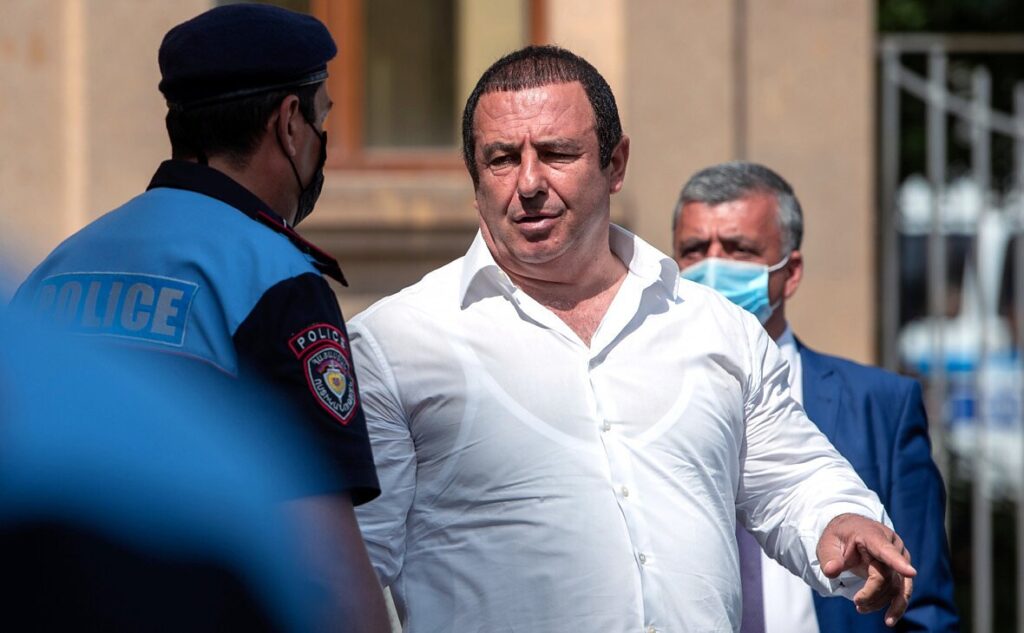
“To put it simply, they are punishing Gagik Tsarukyan.”
He does not rule out the possibility that previous political understandings may have existed under which Tsarukyan would have cooperated with the ruling Civil Contract party, particularly on constitutional amendments.
A Change of Position May Have Had Consequences
According to Hakobyan, it is possible that Tsarukyan later refused such cooperation.
If so, the analyst argues, he is now “paying the price,” although Hakobyan considers such an approach unacceptable.
He Also Sees a Belarus Connection
Hakobyan offers another possible explanation.
“They are also punishing Lukashenko because Mr. Tsarukyan was associated with Lukashenko,” he argues.
The analyst recalls that Belarusian President Alexander Lukashenko made a number of statements about Armenia that were viewed in Yerevan as harsh and unacceptable, significantly damaging relations between the two countries.
In Hakobyan’s assessment, the authorities’ current approach may also be interpreted as an indirect political response to Belarus.