
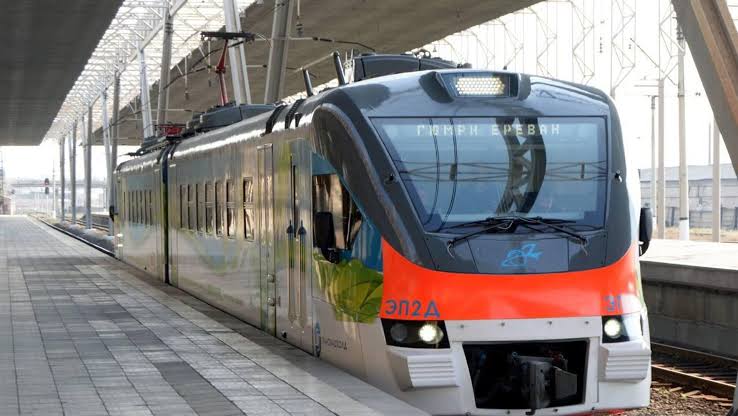
Moscow’s statements regarding Armenia’s railway following the latest Armenian-Russian negotiations have created a difficult situation for Armenia, political scientist Tigran Grigoryan said.
Russia Is Not Prepared to Transfer Railway Management
According to Grigoryan, one of the most problematic statements following the negotiations concerned the railway.
“On the one hand, the option of transferring the concession to a third party was ruled out. Moreover, this was stated not only by Putin but also by his spokesman Dmitry Peskov the following day,” Grigoryan said.
At the same time, according to him, another statement by the Russian side makes the situation even more complicated.
Russia has argued that at this stage it sees no need even for new investment in the railway system because it does not expect a significant increase in trade turnover or freight transportation.
“On the one hand, they do not agree to transfer management, while on the other, they argue that there is no need even to make investments. From Armenia’s perspective, this is quite a problematic situation,” the political scientist said.
Development Will Not Happen on Its Own Without Infrastructure
According to Grigoryan, this creates an obvious contradiction.
If the railway system has missing sections, infrastructure requiring repairs and other problems, it is difficult to expect trade turnover and freight volumes to increase without addressing them.
Under these circumstances, Armenia finds itself in a difficult position: Russia does not want to relinquish its right to manage the railway, while at the same time it is not prepared to invest in the infrastructure needed to generate new economic flows.
The Sides Will Likely Try to Manage the Crisis
According to the political scientist, another important factor is that the sides have agreed to discuss these issues during Nikol Pashinyan’s planned visit to Moscow.
In his assessment, this indicates that at this stage there is no clear intention to resolve the situation through more drastic measures.
“The agreement on this meeting means that the sides will continue trying to manage this crisis and will not take any drastic steps,” Grigoryan said.
According to Grigoryan, Armenia apparently does not intend to unilaterally take back the concession management rights and transfer them to another party, while Russia is not prepared to abandon its position.
“This creates a certain degree of deadlock around the issue,” he said.
The political scientist does not expect the Armenian side’s negotiating efforts to produce significant results in the coming months.
In his view, for Russia the railway issue is not simply an economic or infrastructure matter. It is directly linked to Russia’s presence in the region and its instruments of influence.
“For Russia, this issue appears to be a red line. In other words, it is directly connected to its regional presence and also to its regional leverage,” Grigoryan said.
Under these circumstances, he believes negotiations and discussions are most likely to continue in the coming months without tangible results.
At the same time, the Armenian government may try to address specific railway infrastructure problems through other mechanisms, regardless of the final resolution of the concession management issue.