
Recent understandings reached between Iran and the United States are beginning to reshape the regional balance of power, with potential consequences for Armenia, Syunik, and the TRIPP project. This assessment was offered by international affairs analyst Grigor Balasanyan.
According to him, recent developments have allowed Iran to define its strategic red lines more clearly and strengthen its position in regional affairs.
Iran’s Success Is Changing the Regional Landscape
Balasanyan believes that the latest developments can be viewed as a political victory for Tehran, strengthening Iran’s standing not only in the Middle East but also across neighboring regions.
He notes that public discussion of the recently adopted 14-point declaration has focused primarily on Lebanon, while the actual scope of the agreements may be considerably broader.
The analyst does not rule out the possibility that additional understandings, including confidential arrangements, exist beyond the publicly available documents.
Declining US Influence Extends Beyond the Middle East
According to Balasanyan, American expert circles are increasingly discussing the possibility that the United States could lose influence in the Middle East following the shortcomings of Donald Trump’s regional policies.
In his view, these developments also affect the South Caucasus and several regional initiatives associated with Washington’s strategic agenda.
He argues that the TRIPP project belongs to this category.
Iran’s New Military Doctrine Matters
The analyst places particular importance on Iran’s new military doctrine, adopted roughly a month ago.
According to his interpretation, Tehran may now regard an attack on any member of the so-called “Axis of Resistance” as an attack against Iran itself.
Balasanyan believes this doctrine gives Iran greater justification for preventive actions against perceived threats to its national security.
Within this context, he is convinced that the TRIPP issue has also been discussed during ongoing negotiations between Iran and the United States, even if such discussions have not yet been publicly acknowledged.
According to him, the consequences of these negotiations may become visible in the near future.
Turkey Is Adjusting to New Regional Realities
Balasanyan argues that Ankara recognizes Washington’s willingness to reduce its involvement in certain regional projects and is adapting its policies accordingly.
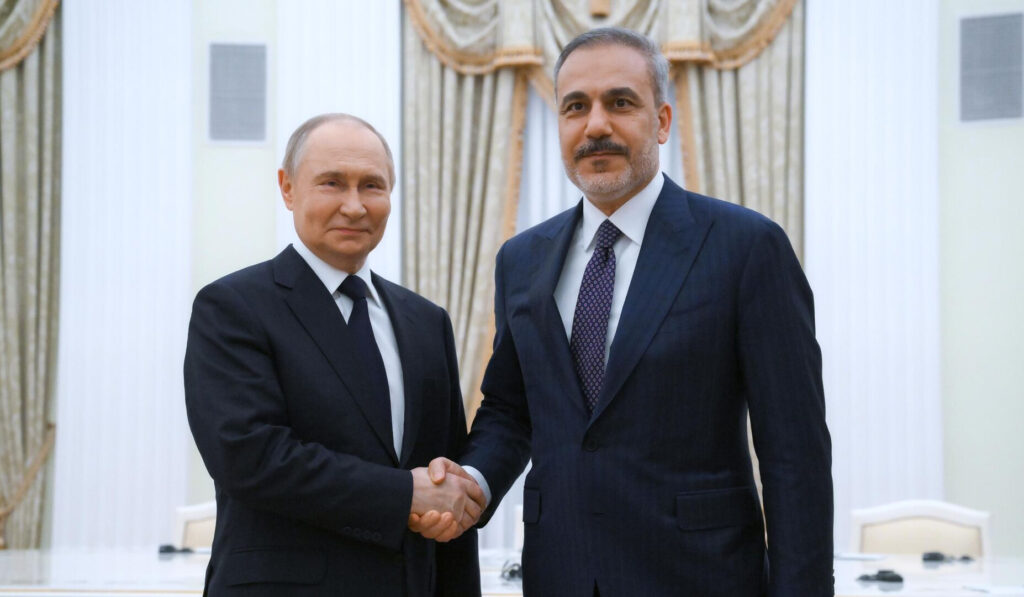
He points to the recent visit of Turkish Foreign Minister Hakan Fidan to Moscow as a possible indication of this adjustment.
In his view, discussions may have focused on spheres of influence and the distribution of roles in the South Caucasus.
Balasanyan believes that the issue of Syunik was likely among the topics considered.
Armenia Remains Outside Key Negotiations
The analyst stresses that such strategic questions are generally discussed among major regional powers.
According to him, Armenia’s position often remains outside the center of these negotiations.
He also offers a critical assessment of the Istanbul Declaration adopted on June 8, noting that while it refers to the Middle Corridor and regional connectivity projects, Armenia is barely mentioned.
Balasanyan argues that Armenia’s recent participation in regional infrastructure-related events has not translated into meaningful political results.
No Lasting Agreement Without Moscow and Tehran
Balasanyan maintains that it is difficult to imagine any stable and long-term arrangement in the South Caucasus without the participation or consent of both Russia and Iran.
He recalls predicting years ago that no fundamental Armenian-Azerbaijani agreement could be implemented without prior coordination with Moscow and Tehran.
According to the analyst, current developments increasingly suggest that this forecast is becoming reality.
He expects to see growing involvement by external actors in both Armenian affairs and the broader South Caucasus region in the coming period.